Also in Thai: ผ่าตัดมดลูกและรังไข่ยกเซ็ต
Category: Gynecology & Menopausal Care
Hysterectomy and bilateral oophorectomy at 48: surgical menopause, estrogen-alone HRT, and bone-health supplements
Seek urgent medical care if you notice
- Leg swelling, shortness of breath, or chest pain — possible thromboembolism after surgery or starting HRT
- Abnormal vaginal bleeding, severe abdominal pain, or high fever after surgery
- Severe depression, self-harm thoughts, or mood symptoms affecting daily life
- Fall with unusual bone pain — possible low-trauma fracture
- Starting or stopping HRT or supplements without gynecologic risk assessment
Total hysterectomy with bilateral oophorectomy in your 40s causes
surgical menopause
from abrupt estrogen loss. Care focuses on gynecologist-guided
estrogen-alone hormone therapy (ET) when appropriate, plus
calcium citrate + vitamin D3, phytoestrogens (soy isoflavones) as adjuncts,
and weight-bearing exercise to prevent
osteoporosis.
1. Understanding surgical menopause: why removing both ovaries triggers menopause immediately
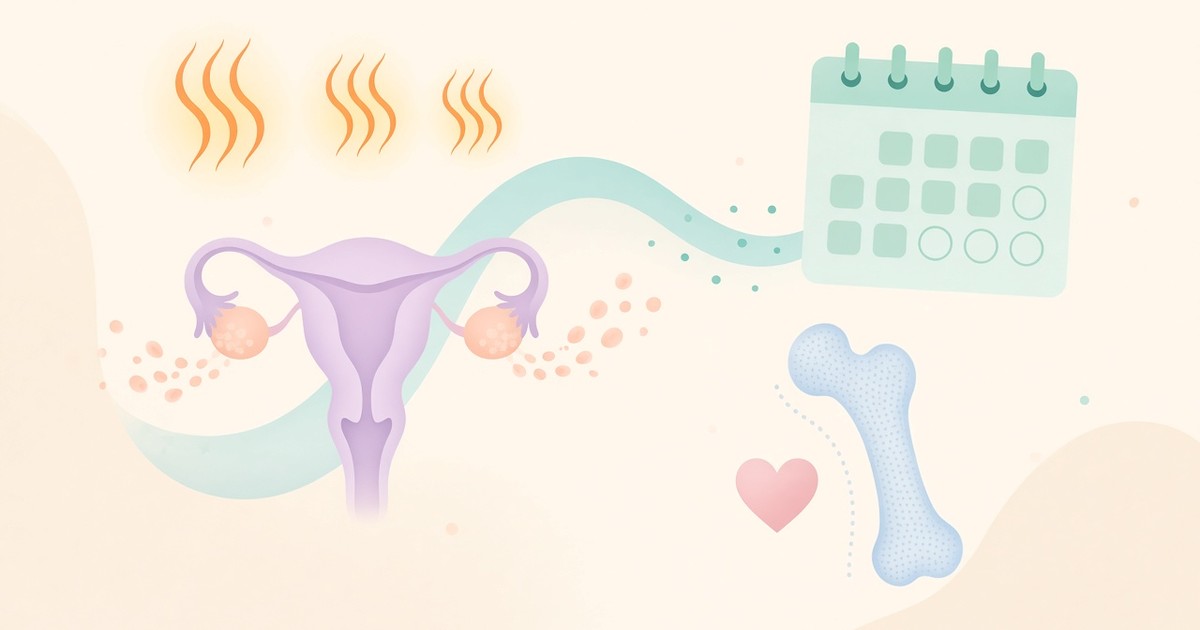
Natural menopause is a gradual ovarian estrogen decline over years.
Bilateral oophorectomy removes ovarian hormone production at once →
surgical menopause.
Possible symptoms after surgery
- Physical: hot flashes, night sweats, vaginal dryness, dry skin, insomnia
- Mood: irritability, low mood, anxiety — often sharper than natural transition early on
- Long term: faster bone loss (osteopenia/osteoporosis risk), central weight gain, lipid changes
| Dimension | Natural menopause | Surgical menopause | Medical management |
|---|---|---|---|
| Estrogen pattern | Slow decline over years | Abrupt drop | Early HRT review · close symptom follow-up |
| Hot flashes | Gradual onset | Often more intense | estrogen therapy · lifestyle · phytoestrogens adjunct |
| Bone density | Accelerated loss over ~5–7 years post-menopause | Faster significant loss | Ca + D3 · weight-bearing exercise · DEXA |
| Vaginal dryness | Develops gradually | Rapid and noticeable | vaginal moisturizer · low-dose local estrogen if prescribed |
| Mood/sleep | Fluctuates by stage | Often hits soon after surgery | HRT · sleep hygiene · psychiatry if needed |
2. HRT decoded: the advantage of no uterus — estrogen-only therapy
After hysterectomy, if a gynecologist approves HRT, many women can use
estrogen-only hormone therapy (ET) without progestogen,
because progestogen in combined HRT mainly protects the
uterine lining
— which is no longer present.
Forms your doctor may consider
- Oral estradiol or transdermal estradiol (patch/gel) based on thromboembolism risk
- Low-dose vaginal estrogen (local) for atrophy — usually low systemic levels
3. Four nutrients and supplements after hysterectomy + oophorectomy
Supplements support care — they do not replace HRT assessment or DEXA.
See
NIH — Calcium
and
Vitamin D.
| Nutrient / therapy | Benefits | Cautions & typical guidance |
|---|---|---|
| Calcium citrate + Vitamin D3 | Bone mass support · osteoporosis prevention | Total Ca ~1,000–1,200 mg/day (food+supplement) · D3 per blood level · citrate absorbs well on empty stomach · caution in kidney disease |
| Phytoestrogens (soy isoflavones) | May ease mild–moderate hot flashes | Does not replace ET when HRT indicated · discuss if breast cancer history |
| Omega-3 fatty acids | Vascular health · anti-inflammatory · dry skin support | Quality source matters · bleeding risk with antiplatelet drugs |
| Vaginal moisturizer / local estrogen | Reduces dryness, burning, daily discomfort | Moisturizer regularly · local estrogen by prescription · avoid petroleum with some barriers |
| Estrogen-alone HRT (if prescribed) | Hot flashes · bone protection · genitourinary symptoms | Individual risk review · breast and vascular surveillance |
Chest tightness or reflux after surgery?
Get personalized guidance from our Advisory team.
4. Easing dryness, hot flashes, and poor sleep
Hot flashes and night sweats
- Estrogen therapy when medically appropriate — strongest evidence
- Light breathable clothing; limit spicy food, alcohol, caffeine before bed
- Soy isoflavones may help mildly as adjunct — discuss with your doctor
Vaginal atrophy / dryness
- Use vaginal moisturizer on a schedule, not only during sex
- Low-dose local estrogen (e.g., estradiol vaginal) when prescribed
- Water-based lubricant for intercourse — avoid irritants
Sleep and bone health
- Consistent sleep time, cool room, screen curfew
- Weight-bearing / resistance training 150+ min/week + walking ~30 min/day
- DEXA scan baseline after surgical menopause — especially if <50
Comparing post-surgery care options
| Approach | Example | Strengths | Limits |
|---|---|---|---|
| Estrogen-alone HRT | oral/transdermal estradiol | Hot flashes · bone · no progestogen needed | Requires risk screening · medical follow-up |
| Calcium + Vitamin D3 | calcium citrate + cholecalciferol | Foundation for all women | Insufficient alone in high-risk bone loss |
| Phytoestrogens | soy isoflavones | Non-synthetic option · mild symptom help | Weaker evidence than ET |
| Local vaginal estrogen | low-dose estradiol vaginal | Targeted atrophy relief · low systemic dose | Prescription · may not treat whole-body flashes |
| Exercise + nutrition | resistance training · protein · vegetables | Stimulates osteoblasts · weight control | Must be consistent · complements Ca/D/HRT |
Frequently asked questions
How is surgical menopause different from natural menopause?
Natural menopause is gradual; bilateral oophorectomy causes sudden estrogen loss with often faster, more intense symptoms and bone loss.
Can I use estrogen-only HRT after hysterectomy?
Often yes when a gynecologist approves — without progestogen — after individual risk screening.
Which supplements prevent bone loss?
Calcium citrate + vitamin D3 (~1,000–1,200 mg total calcium/day), weight-bearing exercise, and DEXA monitoring.
How do I manage hot flashes, dryness, and insomnia?
Estrogen-alone HRT when indicated · vaginal moisturizer/local estrogen · sleep hygiene · medical review if severe.
When should I get a bone density scan?
Baseline DEXA is commonly recommended after surgical menopause, especially under 50 or with risk factors.
Can phytoestrogens replace HRT?
They may help mild symptoms but do not replace prescribed estrogen therapy when indicated for osteoporosis risk.
Scientific mechanism: estrogen, bone, and surgical menopause
By Asst. Prof. Dr. Norawit Raatpiboon
Ovaries are the main source of estradiol and progesterone. After bilateral oophorectomy, estradiol falls abruptly,
affecting hypothalamic thermoregulation (hot flashes), genital mucosa (atrophy), and the osteoblast/osteoclast balance — accelerating bone loss.
Estrogen therapy in post-hysterectomy women reduces vasomotor symptoms and slows bone loss,
alongside calcium, vitamin D, and mechanical loading from exercise.
Phytoestrogens have lower receptor affinity — useful as adjuncts, not primary replacement when estrogen deficiency is severe.
Academic references (E-E-A-T)
This page is general education, not personal medical advice.
Starting, stopping, or changing HRT and supplements requires a gynecologist.
Seek urgent care for severe symptoms or medication side effects.