Gynecology · fibroid surgery, periods, and hot flashes
Hot Flashes and No Periods After Fibroid Surgery: Menopause, Ovarian Function and Treatment
This page is general education. It does not diagnose a person from a social post, and it does not start or stop hormone therapy.
Three levels of urgency, before the hormone discussion
See a gynecologist at the planned visit, or sooner
- Hot flashes that disturb sleep or daily life
- Uncertainty about whether fibroids, the uterus, or the ovaries were removed
- Missed periods when the uterus may still be present and pregnancy is possible
- Possible menopause earlier than usual, especially under 45
Needs urgent assessment, not a routine appointment
These symptoms can relate to a wound, infection, a clot, or bleeding after surgery. Contact the hospital or local urgent service promptly. They are not all instructions to call 1669.
- Fever after recent surgery
- A wound that is red, swollen, or draining pus
- One leg that is swollen, painful, or unusually red
- Abnormal vaginal bleeding after surgery
Call 1669 for a suspected emergency
- Chest pain or sudden breathlessness
- Fainting or a sudden severe collapse
- Heavy bleeding with lightheadedness or weakness
- Trouble speaking, new limb weakness, or symptoms that suggest a stroke
If one of these is present, call 1669 first. Do not open an online symptom survey before the call.
Short answer
A missed period after fibroid surgery does not prove the ovaries stopped. Removing only fibroids can leave periods. Removing the uterus stops bleeding even if the ovaries work. Removing both ovaries before natural menopause can bring hot flashes at once. Call 1669 for chest pain or trouble speaking.
Hot flashes raise the possibility of a hormone change. One symptom does not confirm menopause. Age and the operation note change both the tests and the hormone choice.
Fibroid surgery is at least three different operations
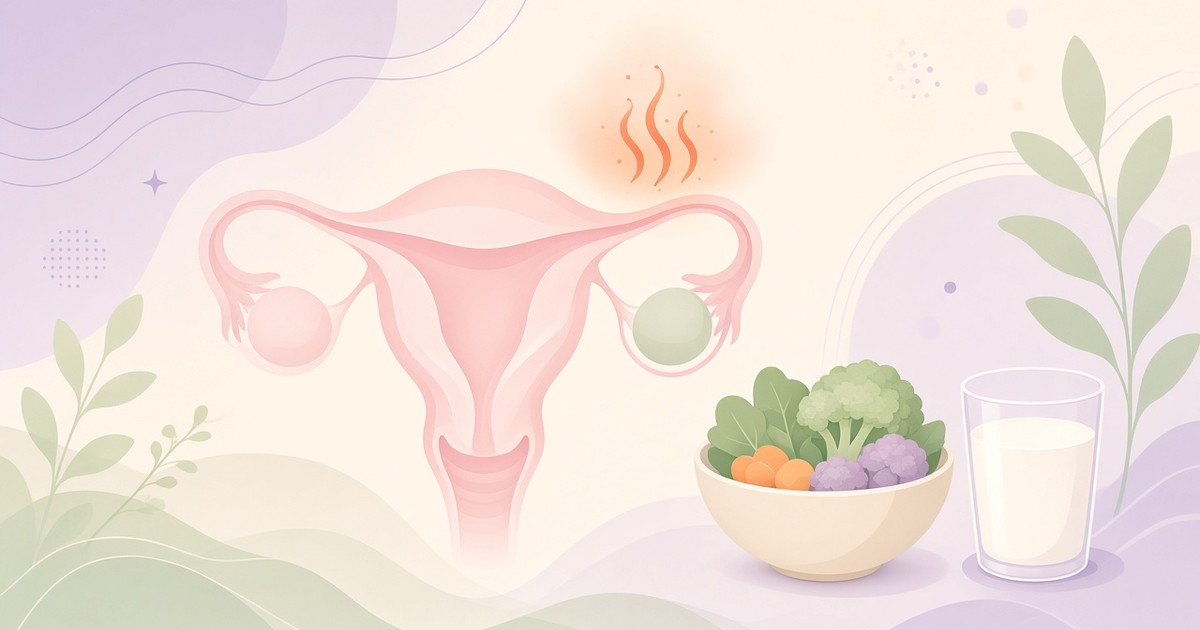
A post that only says fibroid surgery does not say which organ was removed. NHS 111 Wales describes myomectomy as removal of fibroids from the wall of the womb, and as an alternative to hysterectomy. The womb remains, so periods can still occur if the ovaries are working. If periods stop after fibroid-only surgery, another cause needs review, including pregnancy when pregnancy is still possible.
Hysterectomy is different. The NHS states that if menopause has not already occurred, periods stop after the womb is removed, regardless of age. ACOG states that after a total hysterectomy periods do not return, but if the ovaries remain and menopause had not already occurred they can still release eggs and make hormones. Premenstrual symptoms can continue, and menopause may arrive a little earlier than average.
If both ovaries are removed before natural menopause, the NHS and ACOG both describe immediate surgical menopause. Hot flashes and other low-estrogen symptoms can start at once. There is no need to wait 12 months without a period.
Surgery type, periods, and hormones
| Operation | Periods | Ovarian hormones | What to do next |
|---|---|---|---|
| Fibroids removed; uterus and ovaries remain | Periods can continue. Their absence is not explained by loss of the uterus. | The ovaries usually keep working if no other cause is present. | If pregnancy is possible, check for pregnancy and ask a clinician why periods stopped. |
| Uterus removed; ovaries kept | Monthly bleeding stops because the uterus is gone. If the cervix remains, some monthly bleeding can still occur. | Hormones can continue. Menopause may come earlier, but not immediately in every person. | Do not use absent bleeding as proof that the ovaries stopped. The ovaries-kept pages answer a different question. |
| Uterus and both ovaries removed before natural menopause | There is no period and no ovarian cycle. | Estrogen falls at once. | This is surgical menopause. A clinician discusses symptoms, bone health, and hormones when suitable. |
| Natural menopause | With a uterus, NICE uses at least 12 months without a period and no hormonal contraception, in otherwise healthy people aged 45 or over. | The ovaries reduce estrogen over time. | This path is different from removal of both ovaries, and different from bleeding that stops because the uterus is gone. |
Read the urgency levels above, then see when to visit a clinician
This button moves to the visit section. It does not diagnose menopause and does not replace a call to 1669.
See when to visit a clinician and what to have checked
A separate menopause symptom survey only groups symptoms. It does not confirm hormone levels and does not diagnose menopause.
Hysterectomy with ovaries kept is not immediate menopause
The uterus is not the main source of estrogen. The ovaries are. When they are kept, absent bleeding only shows that there is no lining left to shed. ACOG writes that remaining ovaries can still cycle, and menopause may arrive a little earlier than average. The NHS writes that if one or both ovaries remain, menopause may come sooner than it would have without a hysterectomy.
Keeping the ovaries does not guarantee the original timing of menopause. The pages on hot flashes after hysterectomy with ovaries kept and hysterectomy with the tubes removed and ovaries kept answer a known operation, not an unknown one.
Why hot flashes follow removal of both ovaries
The NHS calls this surgical menopause when the ovaries are removed during hysterectomy. Symptoms start immediately, regardless of age. ACOG lists hot flashes, mood change, and vaginal dryness, and a higher chance of thin bones. Hormone therapy can ease symptoms and may help bone health when a clinician finds it suitable and there is no reason to avoid it.
The page on hysterectomy with both ovaries removed is for a known result. It does not answer a person who may have had fibroids removed only.
If the uterus remains but periods stop
After fibroid-only surgery, absent periods cannot be explained by removal of the womb. A clinician still considers pregnancy, a hormone change that began before surgery, medicines that suppress cycles, thyroid disease, and the ovaries themselves. A group post without age, date, or the operation name cannot separate those causes.
What hot flashes can and cannot show
The NHS links lack of estrogen with hot flushes, night sweats, insomnia, fatigue, vaginal dryness, and mood change. Those symptoms raise menopause as a possibility. NICE does not confirm menopause from one symptom. In people aged 45 or over who are otherwise healthy and have had a hysterectomy, the type and combination of symptoms are used. Absent periods do not stand in for ovarian function.
Age changes the assessment, and hormones are not tested in everyone
Age 45 or over, otherwise healthy
NICE recommendation 1.3.1 identifies menopause from symptoms and history without confirmatory laboratory tests. With a uterus and no hormonal contraception, at least 12 months without a period can be used. After hysterectomy, the type and combination of symptoms are used. FSH, estradiol, and AMH are not routine. Recommendation 1.3.4 also avoids inhibin, antral follicle count, and ovarian volume for identifying menopause in this age group.
Age 40 to 45 with suspected menopause symptoms
Recommendation 1.3.6 considers FSH when menopause-associated symptoms are present, including a change in the cycle. The blood result is one part of the assessment. It is not used in people taking combined hormonal contraception or high-dose progestogen. Menopause at 40 to 44 is early menopause. If the diagnosis causes distress, NICE offers psychological support.
Under 40, when premature ovarian insufficiency is suspected
Recommendation 1.7.2 needs both menopause-associated symptoms, including absent or infrequent periods and taking any hysterectomy into account, and raised FSH on two samples taken 4 to 6 weeks apart. One blood test is not enough, and AMH is not routine. If the diagnosis is uncertain, refer to a menopause or reproductive medicine specialist. Unless contraindicated, NICE offers HRT or a combined hormonal contraceptive, and explains continuing at least until the age of natural menopause.
What food can support, and what it cannot do
Meals with enough protein, and calcium and vitamin D matched to diet and fracture risk, support long-term health. The suitable amount belongs to a clinician or dietitian. This page has no milligram recipe, and no single food returns estrogen to a previous level.
Coffee, alcohol, spicy food, and hot drinks trigger hot flashes in some people. Notice the personal pattern and reduce what actually precedes symptoms. There is no need to stop every item at once. Stopping smoking and cutting alcohol supports heart and bone health more broadly.
NICE recommendation 1.4.7 says there is some evidence that isoflavones or black cohosh may relieve vasomotor symptoms, but many preparations exist, safety is uncertain, and interactions with medicines have been reported. Recommendation 1.4.5 says the efficacy and safety of unregulated hormone preparations are unknown. A supplement does not replace an assessment.
Moving again after surgery
After hysterectomy the NHS describes a major operation, a hospital stay of up to about 5 days, and recovery of about 6 to 8 weeks. Rest, and do not lift heavy objects during that time. After myomectomy, NHS 111 Wales describes a hospital stay of a few days and rest for several weeks. The return to aerobic activity or strength work depends on the operation, healing, and the surgeon’s advice. It is not one timetable for every person.
Once cleared, regular movement supports the heart, weight, and bones. It is not an acute treatment for hot flashes, and it does not replace hormones when a clinician has advised them.
Sleep and room temperature
A cooler room, breathable clothes, a fan or a lighter cover, and fewer drinks that wake a person can make night sweats easier to sleep through. These are comfort steps. They do not prove the cause, and they do not restart the ovaries.
Hormones and options that are not hormones
The regimen follows the uterus, illnesses, and the operation
NICE recommendation 1.5.1 offers HRT for vasomotor symptoms associated with menopause. That offer follows an assessment. It is not an instruction taken from a social post. Recommendation 1.8.1 offers combined HRT when the uterus remains, and estrogen-only HRT after a total hysterectomy. Whether the ovaries remain explains how much natural hormone was lost. It does not, by itself, choose the regimen.
Recommendation 1.8.2 says that if a condition may be affected by HRT, seek advice from a clinician with specialist knowledge of that condition. Contraindications and history, including a hormone-sensitive cancer, liver disease, clots, heart disease, or stroke, can change whether treatment is suitable and which form is used. The NHS says not everyone is suitable. If both ovaries were removed and HRT is suitable, that page discusses continuing until the average age of natural menopause and gives 51 as that average. The NHS considerations page was last reviewed on 11 October 2022 and is past the review date it listed, so it is read alongside the current NICE recommendations.
Recommendation 1.8.3 uses the lowest effective dosage. This page gives no dose and does not tell anyone to buy a medicine. A post without age and an operation note cannot say that the writer should start hormones.
CBT and non-hormonal medicines
Recommendation 1.5.2 considers menopause-specific CBT with HRT, when HRT is contraindicated, or when a person prefers not to take HRT. It can also be considered for sleep disturbance and for depressive symptoms that do not meet criteria for depression, when those symptoms sit with vasomotor symptoms. Recommendation 1.5.4 does not routinely offer an SSRI, an SNRI, or clonidine as first-line treatment for vasomotor symptoms alone.
NICE also names fezolinetant when HRT is unsuitable, for moderate to severe vasomotor symptoms. Thailand has a registration for this substance as an oral medicine in a special-control class. The registered indication is moderate to severe vasomotor symptoms associated with menopause. A clinician prescribes it and checks the liver first. This page gives no dose and does not suggest buying it.
Bone and heart health when menopause comes early
NICE advises discussing bone health with people who have menopause symptoms, including at review visits. Under 40, if hormones cannot be used, bone health, cardiovascular health, and symptom care are discussed separately. ACOG notes a higher chance of thin bones when the ovaries are removed before menopause. This page does not give a calcium amount, because an individual fracture-risk guideline was not applied here.
When to see a clinician, and what to bring
See a gynecologist when hot flashes disturb sleep or daily life, when the operation is unknown, when periods stop and the uterus may remain, or when age raises the possibility of early menopause. Bring the operation note or the procedure name, the medicine list, and age.
Fever, a wound that looks infected, one-sided leg swelling, or abnormal bleeding after surgery needs urgent assessment. Chest pain, sudden breathlessness, fainting, heavy bleeding with lightheadedness, trouble speaking, or new limb weakness means calling 1669.
Pages that answer different questions
- Hot flashes after hysterectomy with ovaries kept
- Hysterectomy with tubes removed and ovaries kept
- Both ovaries removed and surgical menopause
- Deciding whether to keep the ovaries before surgery
These four pages are not the same question, and none of them sells a product as a treatment for low hormones.
Common questions
Does a missed period after fibroid surgery mean menopause?
Not by itself. The operation may have removed only fibroids, the uterus, or the ovaries, and age changes the assessment. No bleeding after a hysterectomy does not prove the ovaries have stopped.
Can the ovaries still make hormones after the uterus is removed?
Yes, if the ovaries remain and menopause had not already occurred. Periods stop because the uterus is gone. Menopause may arrive earlier, but not immediately in every person.
Why do hot flashes start after both ovaries are removed?
If both ovaries are removed before natural menopause, estrogen falls at once. Hot flashes, night sweats, and sleep changes can start quickly. This is surgical menopause, not an effect of a food.
Does everyone aged 45 or older need an FSH test?
NICE does not use FSH, estradiol, or AMH routinely in otherwise healthy people aged 45 or over. Diagnosis uses symptoms and history. After hysterectomy it uses the type and combination of symptoms.
How is hormone testing used under age 40?
Suspected premature ovarian insufficiency needs symptoms plus raised FSH on two samples taken 4 to 6 weeks apart. One blood test is not enough, and AMH is not a routine test.
Which hormone regimen is used after surgery?
If the uterus remains and treatment is suitable, NICE offers combined HRT. After a total hysterectomy it offers estrogen-only HRT when suitable. The regimen is not chosen from the ovaries alone, and it is not started without a clinician.
Can food or an SSRI clear hot flashes?
No food restores estrogen. NICE does not offer an SSRI as first-line treatment for vasomotor symptoms alone. Menopause-specific CBT is an option when it fits the person.
Which symptoms need 1669 and which need urgent review?
Call 1669 for chest pain, sudden breathlessness, fainting, heavy bleeding with lightheadedness, trouble speaking, or new limb weakness. Fever, a wound that looks infected, one-sided leg swelling, or abnormal bleeding needs urgent assessment and is not the same instruction.
What the opened sources can explain
Asst. Prof. Dr. Norawit Raatpiboon notes that a period is the lining of the uterus. When the uterus is removed, that bleeding stops even if the ovaries still make estrogen. The NHS links lack of estrogen with hot flushes, night sweats, and disturbed sleep. ACOG separates immediate symptoms after both ovaries are removed from continued hormone cycles when the ovaries are kept.
NICE therefore does not treat absent periods after hysterectomy as proof of menopause, and does not use FSH, estradiol, or AMH routinely in otherwise healthy people aged 45 or over. At younger ages a blood test can have a role. When premature ovarian insufficiency is suspected, one result is not enough. Symptoms plus FSH on two samples taken 4 to 6 weeks apart are required.
Sources opened for this page
- NICE NG23 Menopause: identification and management, recommendations 1.3.1, 1.3.4, 1.3.6, 1.4.5, 1.4.7, 1.5.1 to 1.5.4, 1.7.2 to 1.7.4, and 1.8.1 to 1.8.3
- NHS Hysterectomy
- NHS Hysterectomy considerations, last reviewed 11 October 2022
- ACOG FAQ Hysterectomy, updated September 2024, reviewed May 2025
- ACOG, 7 things about hysterectomy, July 2024
- NHS 111 Wales, Fibroids
- Thai FDA registration for fezolinetant, approved 19 November 2024, special-control medicine
Limits of this page
This page does not know the reader’s age, operation date, procedure, ovarian status, or medicines. It does not say who has reached menopause, and it does not start hormones or supplements. If symptoms match the emergency list, call 1669.