Endocrinology · Early thyroid symptoms
Early Signs of Thyroid Disease: Hyperthyroidism, Hypothyroidism and Thyroid Nodules
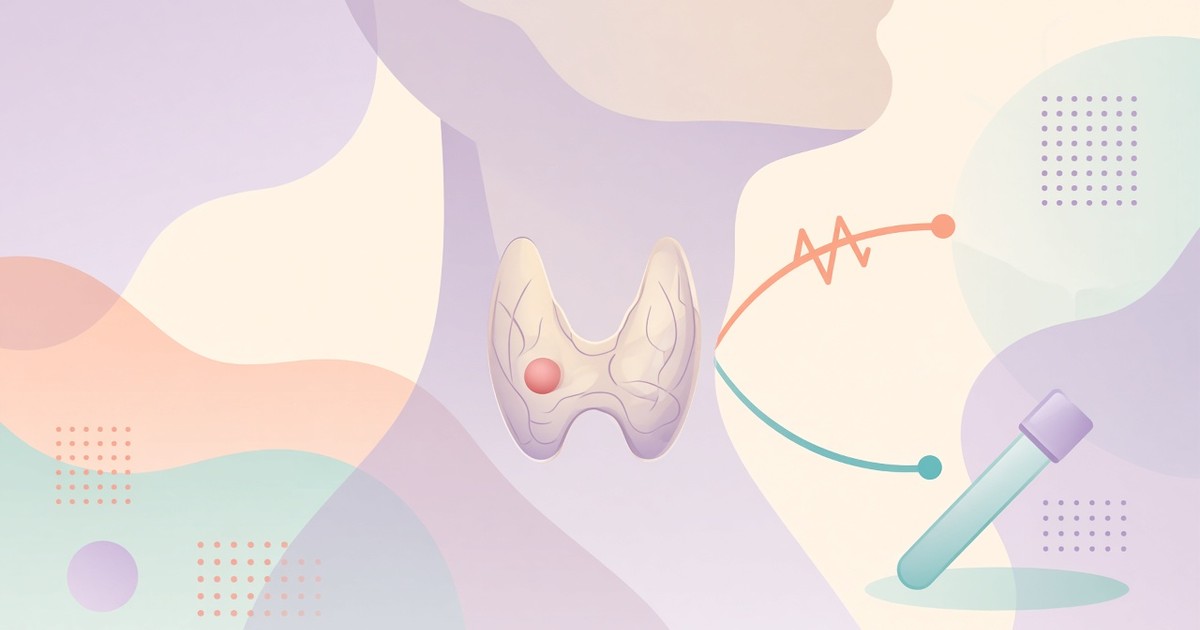
This page explains a general question about early thyroid symptoms. It does not diagnose a person from a message, and it does not tell anyone to start thyroid hormone or an iodine supplement.
When to get help quickly
Call 1669
Chest pain, severe breathlessness, fainting, or another severe heart symptom needs an emergency call. In Thailand that number is 1669. A palpitation on its own is not an automatic emergency call. If the palpitation comes with any of those symptoms, do not wait for a blood test.
See a clinician soon
A neck lump that grows quickly, trouble swallowing, or a hoarse voice that continues should be assessed soon. The fact that most nodules are not cancer is not a reason to delay these symptoms.
When a lump blocks breathing
If a neck lump causes sudden trouble breathing, get emergency help at once. Do not watch that pattern at home.
Short answer
Thyroid disease can mean too much hormone, too little hormone, or a neck nodule. The patterns and tests differ, and symptoms alone cannot diagnose them. Many adults start with TSH. Constipation can occur when hormone is low, but it does not mean thyroid disease.
Thyroid disease is three different problems
The thyroid is a butterfly-shaped gland in the lower front of the neck. It releases thyroxine and triiodothyronine. Those hormones help the body use energy, stay warm, and keep the brain, heart, and muscles working at their usual pace.
Too much hormone speeds many systems. Too little hormone slows them. A goitre or a nodule is a third pattern, and the hormone level may still sit in the reference range.
NICE NG145 recommendation 1.2.1 says to consider tests when thyroid disease is suspected, and to bear in mind that one symptom alone may not indicate thyroid disease. NIDDK also says symptoms of both high and low thyroid hormone overlap with other illnesses, so symptoms alone are not a diagnosis.
A pattern table, not a diagnostic score
The constipation cell follows the American Thyroid Association and the NHS. The other cells follow the NIDDK symptom lists together with those two pages. This table is not a screening score.
| Feature | Too much hormone | Too little hormone |
|---|---|---|
| Weight | May fall even when appetite rises | May rise |
| Temperature | Heat intolerance and heavy sweating | Feeling cold |
| Heart | Fast, pounding, or irregular beats | May slow |
| Bowel | Bowel movements may become more frequent | Constipation can occur. Constipation alone does not mean thyroid disease |
| Skin and hair | Sweating and heat intolerance | Dry skin, dry hair, or hair loss |
| Energy and mood | Nervousness, poor sleep, and fatigue can all occur | Fatigue, low mood, or trouble thinking clearly |
When hormone is high
The NIDDK hyperthyroidism page, reviewed in August 2021, lists weight loss despite a larger appetite, a fast or irregular heartbeat, nervousness, irritability, trouble sleeping, fatigue, shaky hands, muscle weakness, sweating or heat intolerance, frequent bowel movements, and a goitre.
About 1 in 100 people in the United States aged 12 or older have hyperthyroidism. That figure is not a Thai rate. Graves’ disease, an autoimmune attack on the gland, is the most common cause. Other causes include overactive nodules, which are usually not cancer and are more common in older adults, thyroiditis, too much iodine, and too much thyroid-hormone medicine. A pituitary tumour is uncommon.
Untreated disease can lead to an irregular heartbeat, blood clots, heart failure, Graves eye disease, thinner bone, and menstrual or fertility problems. Those risks are not a prediction from one episode of palpitations.
When hormone is low
The NIDDK hypothyroidism page, reviewed in March 2021, lists fatigue, weight gain, cold intolerance, joint and muscle pain, dry skin or dry thinning hair, heavy or irregular periods, a slowed heart rate, and depression. The change can take months or years. Fatigue and weight gain are common and do not by themselves mean a thyroid problem.
Nearly 5 in 100 people in the United States aged 12 or older have hypothyroidism, and most cases are mild or have few obvious symptoms. Hashimoto’s thyroiditis is the most common cause. Surgery, radioiodine, or radiation to the neck can also lower hormone production. Some forms of thyroiditis are high first and low later. Some medicines and pituitary disease are further causes. Iodine deficiency is extremely rare in the United States, and the NHS says it is rare in the United Kingdom, so those statements are not a reason to start an iodine supplement.
Constipation can occur, and it is not a diagnosis
The American Thyroid Association lists constipation when thyroid hormone is low, and says not everyone has every symptom because other health problems cause the same feelings. The NHS lists constipation among common symptoms of an underactive thyroid, together with extreme tiredness, feeling cold, weight gain, trouble concentrating, low mood, dry skin, dry hair or hair loss, a hoarse voice, and irregular or heavy periods in people who have periods.
Constipation can therefore occur in hypothyroidism, but a person with constipation does not automatically have thyroid disease. History, examination, and blood tests are required.
Very severe hypothyroidism can rarely lead to myxoedema coma. The NHS calls this an emergency that needs hospital treatment and says it is more common in older people. The name is not a home label for constipation or tiredness.
Older adults may not match the textbook picture
NIDDK says that in older adults, hyperthyroidism may be mistaken for depression or dementia, with loss of appetite or withdrawal, rather than the clearer picture of palpitations, heat intolerance, and weight loss.
Hypothyroidism also develops slowly and is easy to miss. The NHS includes a hoarse voice among underactive-thyroid symptoms. If a lump is also present, or the hoarse voice continues, use the “see a clinician soon” list above. Do not wait on the assumption that the voice change is only a low hormone level.
A neck nodule when the hormone level is still normal
NICE recommendation 1.1.6 says people with thyroid enlargement should be told that goitre and nodules are common and usually not cancerous. The same recommendation names the warning symptoms: shortness of breath, rapid growth of a nodule, a hoarse voice, and swallowing difficulties. The usual benign course does not cancel those warnings.
Some people have no palpitations, no weight change, and a hormone result still inside the reference range, yet a clinician can feel a lump or an enlarged gland. That is a structural question. A lump does not by itself prove or exclude a hormone problem.
The NIDDK thyroid-test page says ultrasound is most often used to look at nodules. It is not the first test for every person who wonders whether tiredness is thyroid disease. If a nodule is found on examination or imaging, fine-needle aspiration may be used to see whether it is cancer. That decision uses ultrasound features and risk factors. This page does not give a size cutoff in millimetres.
Patterns that also look like menopause, anaemia, heart disease, or anxiety
Palpitations, fatigue, weight change, feeling hot, or feeling cold can come from anaemia, short sleep, stress, heart disease, or menopause. NICE recommendation 1.2.5 says thyroid symptoms in menopausal women may be mistaken for menopause. Recommendation 1.2.3 says to consider thyroid tests for depression or unexplained anxiety. Considering a test is not the same as deciding that the mood change came from the thyroid.
The guideline offers tests for type 1 diabetes, other autoimmune disease, or new atrial fibrillation. It does not offer a thyroid test solely because a person has type 2 diabetes. It also says not to test during an acute illness unless that illness is suspected to be caused by thyroid dysfunction, because the illness can change the result.
The page on night sweats at 41 answers a different question about early menopause. Hair shedding after thyroid treatment starts is not this early-symptom question. Non-pitting foot swelling separates Graves-related skin change from other causes of a swollen foot.
Choose the test that answers the question
Symptoms help a person describe the pattern. The blood test and the ultrasound come next only when there is a reason. They are not one package for everyone who says “it might be my thyroid.”
See when a thyroid test is useful and which test comes first
When to test, and which test comes first
For adults in whom pituitary disease is not suspected, NICE recommendation 1.2.8 says to consider TSH alone. If TSH is above the reference range, measure FT4 in the same sample. If TSH is below the range, measure FT4 and FT3 in the same sample.
Children and people with suspected pituitary disease follow a different path. Recommendation 1.2.9 says to consider TSH and FT4 together from the start, and to add FT3 in the same sample if TSH is low. The American Thyroid Association says a T3 test is not often needed to diagnose hypothyroidism. That fits the step in which a high TSH is followed by FT4. It does not remove FT3 when TSH is low.
If symptoms worsen or new symptoms appear, recommendation 1.2.10 allows a repeat, but not sooner than 6 weeks after the last test. The NHS describes a GP asking about symptoms, examining the neck, and using blood tests that look at TSH and thyroxine. For adults without suspected pituitary disease, the NICE sequence is the one used here. It is not a full hormone panel on day one.
Antibodies, ultrasound, and sampling a nodule
Not every antibody is needed on the first day. Recommendation 1.3.1 says to consider TPO antibodies in adults with a high TSH, and not to repeat that test. TSH-receptor antibody is used when Graves’ disease must be separated from temporary thyroiditis. Ultrasound is for a lump or a structural question, not for every tired person. Fine-needle sampling depends on ultrasound features and risk factors. This page does not print a millimetre cutoff.
Biotin may push a result falsely high or low
NICE recommendation 1.2.11 says to ask about biotin, because a high intake from supplements may cause falsely high or low results. Tell the clinician and the laboratory what is being taken. This page does not set a number of days to stop a supplement, because the laboratory method was not opened here, and it does not tell anyone to stop a prescribed medicine. The American Thyroid Association also says to tell the clinician if biotin is started or stopped while taking thyroid hormone.
Treatment is not one recipe
| Point | Too much hormone | Too little hormone | Nodule or goitre |
|---|---|---|---|
| Hormone | High | Low | May still be in the reference range |
| Blood test in many adults | TSH first. If low, add FT4 and FT3 | TSH first. If high, add FT4 | Blood tests ask about function. They do not sample the lump |
| Imaging and sampling | Ultrasound is not for everyone | Ultrasound is not for everyone | Ultrasound when indicated. Sampling when features and risk meet the criteria |
| Treatment direction | An antithyroid medicine, radioiodine, or surgery, chosen by cause. A beta blocker may ease symptoms while waiting | Thyroid-hormone replacement on a clinician’s plan, adjusted with blood tests | Observation, sampling, or treatment based on the result. Not every lump starts with a hormone tablet |
The table is an overview. It is not a prescription, and it is not a menu for choosing a treatment at home.
What this page does not ask anyone to start
NICE offers levothyroxine as first-line treatment for primary hypothyroidism. After a start or a dose change, NIDDK and the American Thyroid Association describe a blood test at about 6 to 8 weeks. Too little replacement may leave a person tired, cold, or constipated. Too much may cause a fast heartbeat, feeling hot, and weight loss, and over time it is linked with atrial fibrillation or thinner bone. Do not start, stop, or change the dose without the clinician.
Hyperthyroidism is treated according to its cause, with an antithyroid medicine, radioiodine, or surgery. Radioiodine is not suitable in pregnancy or while breastfeeding, and it commonly leaves the gland underactive later. A beta blocker can ease palpitations and tremor while other treatment takes effect. It does not stop hormone production. While taking an antithyroid medicine, a rash, yellow skin, severe abdominal pain, loss of appetite, marked fatigue, and especially a sore throat with fever, need prompt contact with a clinician. Do not wait for the next routine visit.
Do not start kelp or an iodine supplement on your own. NIDDK says a large iodine intake can worsen autoimmune thyroid disease in either direction. A person who takes thyroid medicine and is pregnant or planning pregnancy should tell the clinician so the plan can be adjusted. Do not change a dose from this page.
Why the symptoms point in opposite directions
Asst. Prof. Dr. Norawit Raatpiboon explains that thyroid hormone sets how tissues use energy. When there is too much, heart rate and body heat rise, so palpitations, sweating, and weight loss despite hunger can appear. When there is too little, many systems slow, so feeling cold, fatigue, a slower heartbeat, and constipation can appear, as the American Thyroid Association and the NHS describe.
NICE recommendation 1.1.2 says symptoms may lag treatment changes by weeks to months, and that day-to-day swings in unexplained symptoms are unlikely to be thyroid disease because the body stores a large amount of thyroxine. A neck nodule is a structural finding. It can exist with a normal or an abnormal hormone level, so a feeling alone cannot separate it from high or low hormone.
Questions people ask
Do early thyroid symptoms look the same in everyone?
No. Everyday talk about thyroid disease can mean too much hormone, too little hormone, or a neck nodule. The symptoms and tests differ, and one symptom cannot diagnose the condition.
Does constipation mean hypothyroidism?
Constipation can occur when thyroid hormone is low, but constipation does not mean a person has thyroid disease. Other symptoms and test results are needed.
Must TSH, FT4, FT3, and antibodies all be checked at the first visit?
No. Many adults who are not suspected of pituitary disease start with TSH. FT4 is added if TSH is high. FT4 and FT3 are added if TSH is low. Antibodies are used when there is a reason.
Does every tired person need a thyroid ultrasound?
No. Ultrasound looks at structure or a nodule when there is a reason. It is not the first test for every person who feels tired.
Are most thyroid nodules cancer?
Goitre and nodules are common and usually not cancer. Rapid growth, a hoarse voice that continues, trouble swallowing, or trouble breathing should not be set aside because of that fact.
Does every palpitation need an emergency call?
No. In Thailand, call 1669 when palpitations come with chest pain, severe breathlessness, fainting, or another severe heart symptom. A palpitation on its own needs context, not an automatic emergency call.
How can biotin change a thyroid blood test?
A high intake of biotin from supplements may make results falsely high or low. Tell the clinician and the laboratory. This page does not set a number of days to stop a supplement, and it does not tell anyone to stop a prescribed medicine.
How do menopause symptoms differ from thyroid symptoms?
Hot flashes, fatigue, and mood change can overlap. Guidance notes that menopausal symptoms may be mistaken for thyroid dysfunction. History and tests separate them. One symptom does not.
Sources opened for this page
- NICE NG145 Thyroid disease: assessment and management for the TSH, FT4, and FT3 sequence, antibodies, biotin, and nodule warnings
- NIDDK Hyperthyroidism, reviewed August 2021
- NIDDK Hypothyroidism, reviewed March 2021
- NIDDK Thyroid tests, reviewed May 2017
- American Thyroid Association, Adult Hypothyroidism, including constipation
- NHS, Underactive thyroid, including constipation
Medical disclaimer
This page is general information drawn from the guidance and public pages opened for it. It is not an examination or a reading of anyone’s blood tests, and it does not replace a clinician. Do not start, stop, or change thyroid medicine, iodine, or a supplement from this page. Chest pain, severe breathlessness, fainting, or sudden trouble breathing from a neck lump means calling 1669 in Thailand.